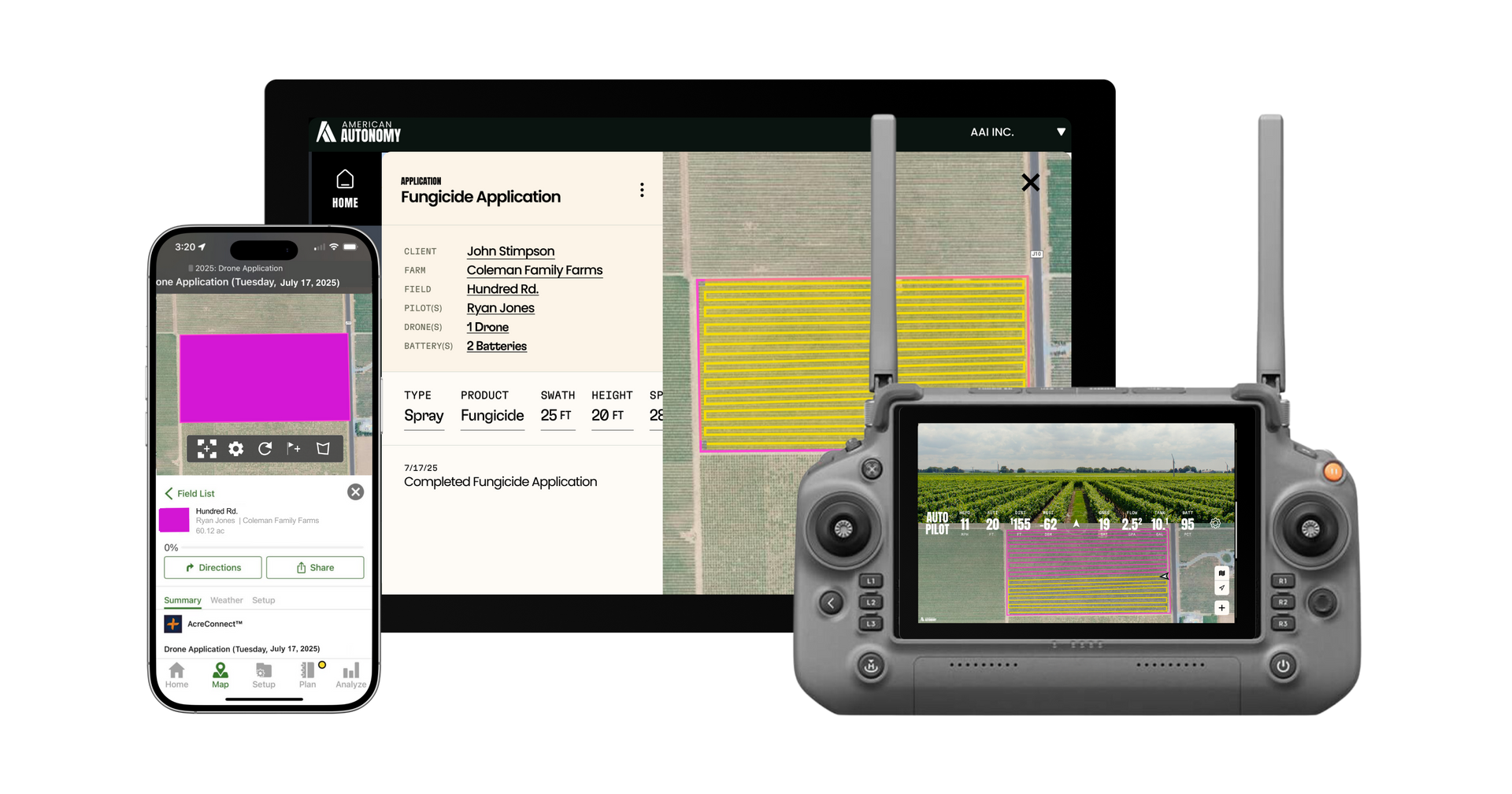
IOWA CITY, IA [August 1, 2025] – Rantizo, Inc. today announced the strategic sale of its drone spraying operations business to a specialized investment group with extensive experience in agricultural technology and aerial application services. Under new ownership, the Rantizo brand and name will continue as a trusted leader in drone spraying services, ensuring ongoing expansion and strengthening of its legacy of precision, reliability, and innovation nationwide. Simultaneously, Rantizo, Inc. has rebranded as American Autonomy, Inc., strengthening its focus on delivering software solutions for the American spray drone industry. This rebranding aligns with the company's ongoing mission to put autonomy to work, starting with spray drones. “We are thrilled to see Rantizo spray services positioned for significant growth,” said Mariah Scott, former CEO of Rantizo and now CEO of American Autonomy, Inc. “Our evolution into American Autonomy, Inc. allows us to deepen our focus on software, empowering drone operators with tools to manage their season. It’s a strategic leap forward benefiting our team, partners, and customers.” AcreConnect ® , a cornerstone software product originally developed by Rantizo, will anchor the American Autonomy Inc. portfolio. AcreConnect ® supports drone operators throughout the spray season— from customer management, job creation and flight log management to application map creation and distribution, billing, and FAA reporting. A spokesperson for the acquiring group added, “Rantizo has established itself as a trusted leader with unparalleled expertise in drone-based agricultural applications. This acquisition strengthens our ability to bring cutting-edge, technology-driven aerial spraying services to the backbone of American agriculture, empowering growers with modern, dependable solutions. Our commitment is long-term: to build upon Rantizo’s strengths, invest strategically, and drive sustainable growth to serve growers and ag retailers at scale." To learn more about ongoing drone spray services, visit www.Rantizo.com . Additional information about American Autonomy, Inc. can be found at www.american-autonomy.com . About American Autonomy, Inc. Formerly Rantizo, Inc., American Autonomy, Inc. develops industry-leading software solutions, including AcreConnect ® , to support the American spray drone industry. About AcreConnect® AcreConnect ® software helps spray drone operators manage their spray season – from customer management, job creation and flight log management to distribution of application maps, billing and FAA reporting. AcreConnect ® software is developed, hosted and supported in the U.S., where our team has been flying and supporting spray drones since 2018. ©2025 American Autonomy, Inc. All rights reserved. Rantizo® is a trademark of Rantizo Inc. American Autonomy ™ and AcreConnect ® are trademarks of American Autonomy, Inc. All other trademarks remain the property of their respective owners.
IOWA CITY, IA [August 1, 2025] – Rantizo, Inc. today announced the strategic sale of its drone spraying operations business to a specialized investment group with extensive experience in agricultural technology and aerial application services. Under new ownership, the Rantizo brand and name will continue as a trusted leader in drone spraying services, ensuring ongoing expansion and strengthening of its legacy of precision, reliability, and innovation nationwide. Simultaneously, Rantizo, Inc. has rebranded as American Autonomy, Inc., strengthening its focus on delivering software solutions for the American spray drone industry. This rebranding aligns with the company's ongoing mission to put autonomy to work, starting with spray drones. “We are thrilled to see Rantizo spray services positioned for significant growth,” said Mariah Scott, former CEO of Rantizo and now CEO of American Autonomy, Inc. “Our evolution into American Autonomy, Inc. allows us to deepen our focus on software, empowering drone operators with tools to manage their season. It’s a strategic leap forward benefiting our team, partners, and customers.” AcreConnect ® , a cornerstone software product originally developed by Rantizo, will anchor the American Autonomy Inc. portfolio. AcreConnect ® supports drone operators throughout the spray season— from customer management, job creation and flight log management to application map creation and distribution, billing, and FAA reporting. A spokesperson for the acquiring group added, “Rantizo has established itself as a trusted leader with unparalleled expertise in drone-based agricultural applications. This acquisition strengthens our ability to bring cutting-edge, technology-driven aerial spraying services to the backbone of American agriculture, empowering growers with modern, dependable solutions. Our commitment is long-term: to build upon Rantizo’s strengths, invest strategically, and drive sustainable growth to serve growers and ag retailers at scale." To learn more about ongoing drone spray services, visit www.Rantizo.com . Additional information about American Autonomy, Inc. can be found at www.american-autonomy.com . About American Autonomy, Inc. Formerly Rantizo, Inc., American Autonomy, Inc. develops industry-leading software solutions, including AcreConnect ® , to support the American spray drone industry. About AcreConnect® AcreConnect ® software helps spray drone operators manage their spray season – from customer management, job creation and flight log management to distribution of application maps, billing and FAA reporting. AcreConnect ® software is developed, hosted and supported in the U.S., where our team has been flying and supporting spray drones since 2018. ©2025 American Autonomy, Inc. All rights reserved. Rantizo® is a trademark of Rantizo Inc. American Autonomy ™ and AcreConnect ® are trademarks of American Autonomy, Inc. All other trademarks remain the property of their respective owners.